( Update: 26/09/2014 )
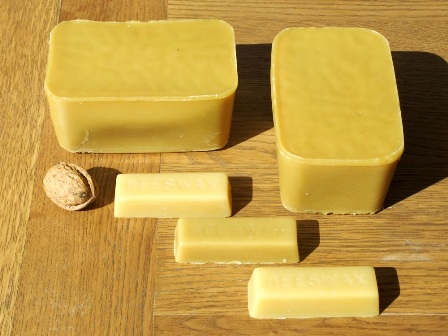 Beeswax is usually sold in "Cakes" held in a plastic container with slots to allow you to "Draw" the line through. Another method, which I use, is to immerse the line in a vat of hot beeswax. There are special wax smelters sold in craft stores. They are commonly used by candle makers.
With that said, why use beeswax at all?
1- It coats the rigging line, thus protecting it and keeping down the "Fuzzes" and "Fizzes".
2- It will stay on the thread a long time
3- Reduces curling and twisting
4- Helps to keep knots in place
5- Makes the line more pliable and "lay" in a more natural position (Good for foot ropes, anchor ropes and any line that would usually not be under tension, such as stay or running rigging.)
How to apply:
1- If using the cake method: Draw the line through the slots in the container, two to three times, giving the line a small turn with each pass. Now, you could now run the line across the surface of a 60 watt light bulb to melt the wax into the line, or "run" it through your fingers to create heat to melt the wax. This takes some practice to get just the right results. And be careful not to burn your fingers on the hot light bulb.
2- The "smelter" method: Cut the length of line needed (I'll cut various lengths at one time, and hang them up till needed), dip the line(s) into the vat of melted beeswax, let the wax set for a few seconds, then draw off any excess with a clothe.
The cake method works well for stay and running rigging and the smelter method works best for 'loose' rigging. That is; lines that have to lay in a naturally sagging position (foot ropes, anchor ropes, etc.)
The one thing to remember is to use beeswax, not paraffin or craft candle wax. Practice with some samples first to get the right technique. And don't burn yourself!
Source: http://shipmodeling.net


Online: 10
Visit counter : 4558303
Copyright © 2012 by hxcoexp.com - All right reserved
Designed by OSG.VN