( Update: 25/09/2014 )
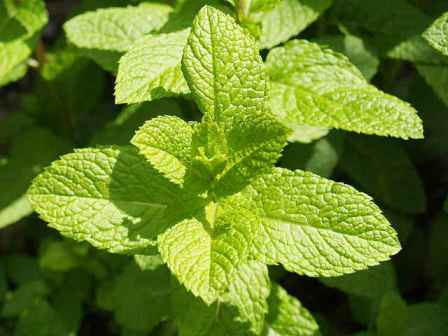 Mint is one of those herbs that has a ton of uses and grows prolifically in the garden. Sometimes that prolific growth can be a nuisance (it has, in fact, take up residence in one of my raised beds and it’s definitely a battle between me and it). But like anything else in life, what can be seen as a hassle can also be take as a gift with just a slight shift in perspective: Instead of cursing your prolific mint, harvest it shamelessly and exploit it for one of its many uses! SHAMELESSLY!
There are many kinds of mint (spearmint, peppermint, chocolate mint, apple mint, pineapple mint, and others. They are all perennial, meaning they’ll come back year after year; you’ll have a never-ending supply of this tasty plant after sticking just one in your garden. But beware: if you don’t want it to spread everywhere make sure you plant your mint in an area where you won’t mind it getting a bit out of hand. However, flavored mints such as chocolate and apple are not as prolific as the straight-up peppermint and spearmint.
Mint does best in full sun to part shade with a soil that is slightly acidic, rich, and fairly moist, so if you live in a more arid environment, your mint won’t explode as it would in more ideal growing conditions. And, of course, you can grow mint in a pot for year-round fresh use provided it gets a southern exposure when indoors.
Mint not only serves as a valuable food and flavoring in the kitchen, it also has medicinal uses such as calming the stomach, assisting with gingivitis, helping relieve colds, and cooling overly warm skin, among others. It can also be used to repel pests in the home and garden, and lend a wonderful scent to washing linens when included with vinegar in the final rinse water of a wash. I’ll cover these uses in more detail in a future ‘spin.
HARVESTING
If your mint is a new planting, wait a year or two for it to establish a strong root system before you start harvesting it. You can clip fresh mint sprigs during this time for sure, but for a full-on, no-holds-barred harvest, wait until the mint is well established. With my established mint, I literally hack it back in late spring, mid summer, and again in very early fall until there is only about 6 inches of stem left; it grows back readily. Just make sure you don’t harvest too late in the fall; you want to give the plant enough time to recover before winter hits. Like any other herb, the best time to harvest mint is in the morning while the volatile oils in the plant are at their strongest.
COLLECTING AND STORING
Collect your dried mint by crushing the leaves off the stem.
The leaves are the edible portion of mint, so when it is thoroughly dry, you’ll need to remove them from the stems. I do this by taking one of my bunches, holding it over a large bowl or sheet, and simply pressing the stems. The leaves crush off cleanly from the stem, and any bit of stem that might break off and fall is easily removed after I have finished removing all of the leaves from my mint.
It is recommended that you store your mint in a cool location away from direct sunlight. I store a portion of my mint in a used tea tin and keep it in a cupboard by my tea kettle. The rest of my yearly supply is stored in a large air-tight mason jar in my pantry. Sometimes I just take the jar out and look at it…herbs that you harvested and dried yourself are not only fresher (and thereby tastier) than store bought, looking at them can also help us feel the summer sun on a cold winter day as we recall the harvest.
Source: http://ruralspin.com


Online: 32
Visit counter : 4557019
Copyright © 2012 by hxcoexp.com - All right reserved
Designed by OSG.VN