News > Export News
Latex
(
Update:
16/06/2014
)
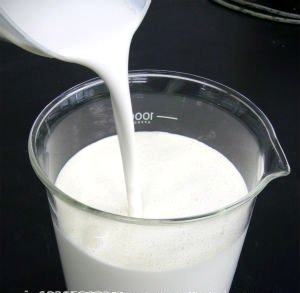
Latex or rubber latex is a complex fluid, composition and properties differ depending on the type. In principle, one could say it's a state of emulsion (white emulsion) of the rubber particles (dispersed phase) dispersed in liquid environments. In Vietnam, also called latex rubber water.
Latex rubber is divided into two categories: natural latex rubber (NR) and synthetic rubber latex (synthetic rubber). Synthetic rubber has many types: polyisoprene (IR); Polybutadiene (also called Buna rubber abbreviated BR); Styrene - Butadiene Copolymer (Buna-S rubber abbreviated SBR); Ethilene - Propilene copolimer (EPDM); Polyisobutylene (butyl rubber); Polychloroprene (neoprene rubber CR); Acrylonitrile - Butadiene copolymer (Nitrile rubber); Polyacrylate; Polyurethane (PU rubber); Polysilicone (Silicone rubber); NhienMoi ... natural rubber latex type has its own characteristics due to technical differences in chemical structure between them. Correspondingly there will be multiple types of synthetic rubber latex. However, in today's manufacturing mattresses use latex SBR synthetic rubber.
Latex Natural Rubber (NR) (NR: Natural Rubber): Or say exactly polyisoprene natural rubber latex harvested from rubber tree, Hevea Brasiliensis mainly (Euphorbiaceae family), by tapping . Latex composition comprises:
Dispersing: the polyisoprene rubber particles - are synthesized by biological pathways (controlled by enzyme systems). Therefore polyisoprene obtained the interesting properties of structures Vietnam - conditioning can establish very high: 100% cis isomer, large molecular weight and homogeneity, the level closely, the content ... rubber particles, depending on the physiological characteristics of crops ranging from 25-45%.
Serum: Serum is the liquid component of the complex consists mainly of water (52-70%), protein (2-3%), and fatty acid derivatives (1-2%), and glucid heterosid (about 1%), minerals (0.3 - 0.7%)
Synthetic rubber SBR Latex: Forming method copolymer emulsion (a method of chemically synthesized polymer or used) from two monomers Styrene and Butadiene. Therefore rubber Styrene - Butadiene copolymer obtained no Vietnamese have interesting properties in terms of structure as natural polyisoprene rubber, ie up to the level of inferior conditioning. The products made from synthetic latex SBR will have mechanical features (fault resistance, elasticity, ...) lower. As for ventilation mattresses made from synthetic latex SBR flatten extent (valley) higher (due to lower elasticity). However, due to the number of chemical bonds less unstable than natural rubber should be aging level (light, ozone, temperature, ...) better. SBR synthetic rubber latex which are composed as follows:
Dispersing: is the rubber particles Styrene - Butadiene copolymer.
Distributed environments: mainly water and a few other catalysts for polymerization reactions emulsion.
Such products (including KymDan Mattress) is made from natural latex rubber will have mechanical features (fault resistance, elasticity, ...) better made from synthetic rubber latex . On the other hand, due to specific structural chemistry - it contains many unstable links should not these products will easily aging in conditions exposed to light, heat, ozone, petroleum solvents them oil, ... So often in production technology to add some additives to minimize this defect. But the cons is also an advantage when it comes to aspects of environmental friendly because of its ability to decompose more rapidly than synthetic rubber.
Source: http://www.kymdan.com/